IFA Advances Advocacy for a UN Convention on the Rights of Older Persons at IGWG2 in Geneva
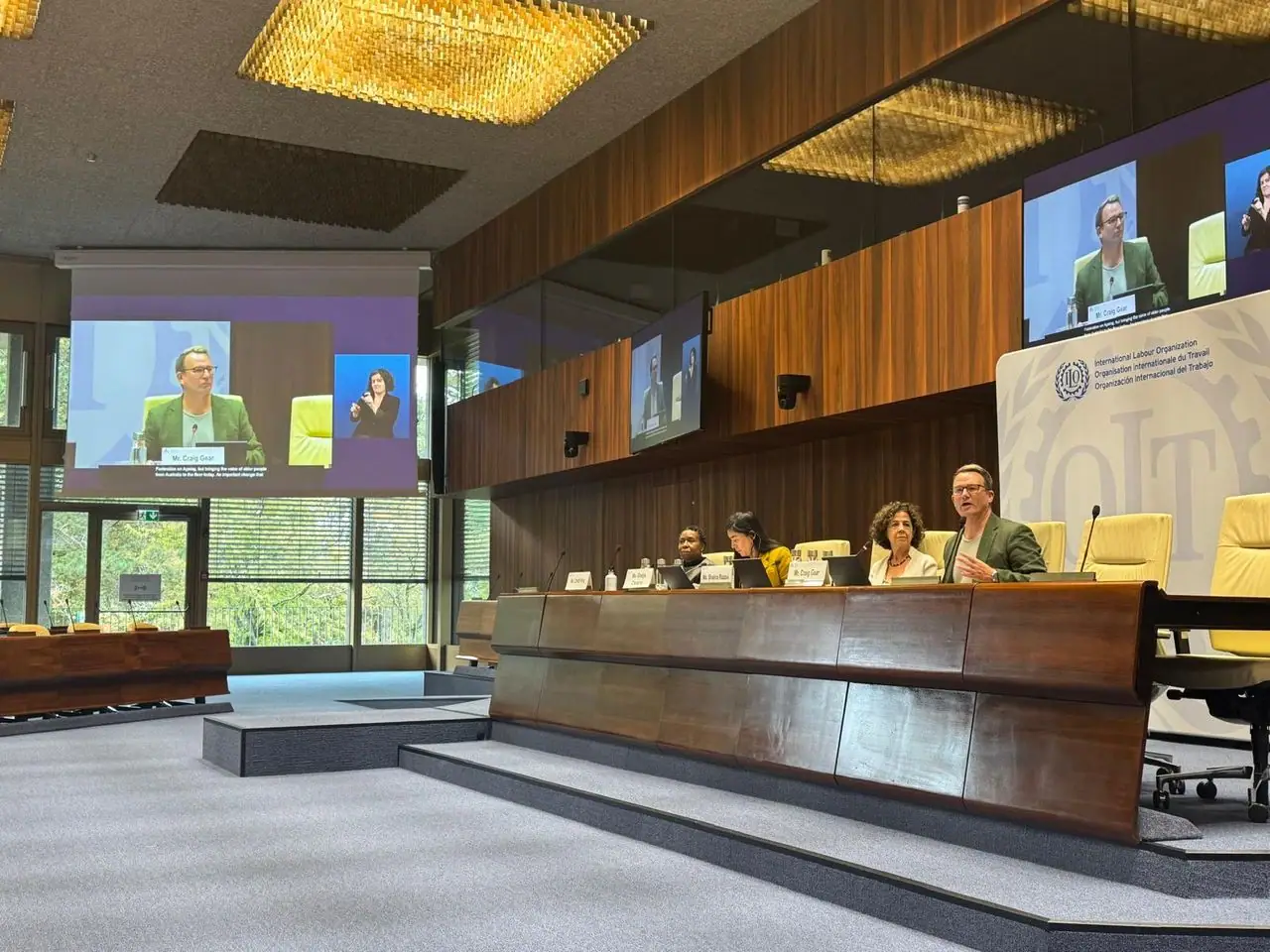
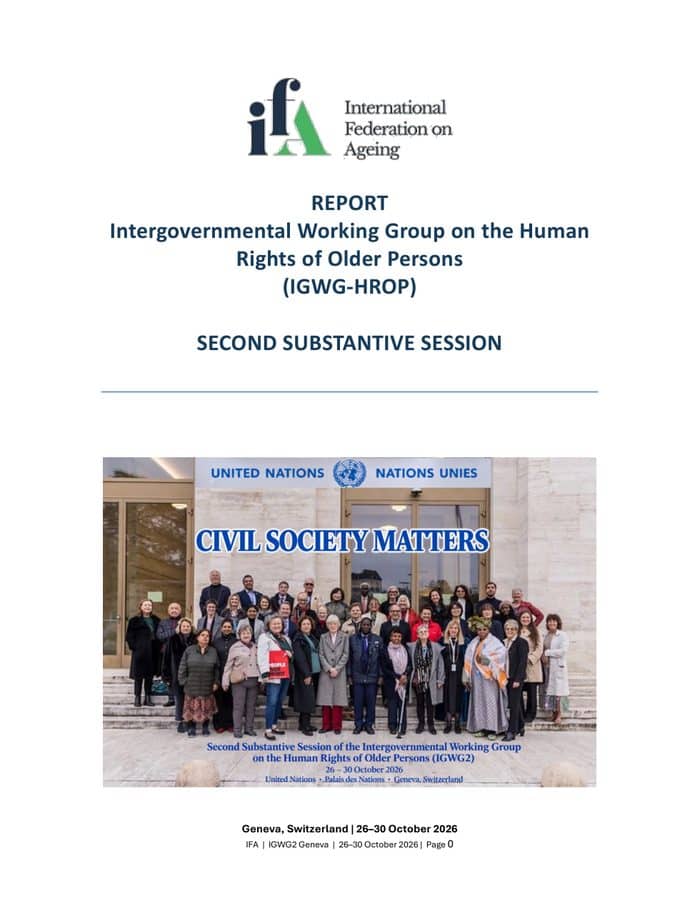
The International Federation on Ageing (IFA) actively participated in the second substantive session of the Intergovernmental Working Group (IGWG) on the Human Rights of Older Persons, held in Geneva from 26–30 October 2026. The session marked an important step towards the development of a legally binding United Nations Convention on the Rights of Older Persons, moving discussions beyond foundational principles towards the development of substantive provisions for a future Convention.
Throughout the week, IFA worked alongside Member States, civil society organisations, national human rights institutions and international partners to advocate for a comprehensive, rights-based instrument that recognises and protects the rights of older persons in all their diversity.
Advancing a comprehensive, rights-based approach
Through its delegation, IFA contributed to discussions across the principal thematic areas of the negotiations, including the preamble, definitions, State obligations, catalogue of rights, and implementation, monitoring and international cooperation.
IFA’s interventions emphasised several priorities essential to ensuring that a future Convention delivers meaningful and lasting change:
- Recognising ageism, age-based discrimination and intersecting forms of discrimination, while ensuring that definitions are inclusive and do not reinforce stereotypes about ageing, vulnerability or dependency.
- Ensuring that older persons are recognised as rights holders, with the ability to exercise choice, maintain independence and participate meaningfully in decisions affecting their lives.
- Recognising social security, income security and an adequate standard of living as essential components of human rights protection throughout older age.
- Moving beyond general commitments towards concrete legal, institutional and policy measures that translate rights into practice.
- Supporting clear implementation, reporting and accountability mechanisms, including consideration of a dedicated Committee on the Rights of Older Persons.
- Ensuring older persons and their representative organisations are involved not only in developing the Convention, but also in its future implementation and monitoring.
Across these discussions, IFA highlighted the importance of a life-course approach that recognises the inequalities accumulated over time and the diverse experiences of ageing. A future Convention must address the realities of longer lives and changing societies while ensuring that existing human rights protections are strengthened.
Supporting collective civil society engagement
In addition to its participation in the formal negotiations, IFA contributed to the civil society preparatory meeting on 26 October, jointly organised by the Global Alliance for the Rights of Older People (GAROP) and the NGO Committee on Ageing (Geneva).
The preparatory meeting provided an important opportunity for civil society organisations to coordinate advocacy priorities, exchange perspectives on proposed treaty provisions and support effective participation throughout the week. It also helped ensure that newcomers to the process had the information and support needed to engage in the negotiations.
IFA’s participation reflected its ongoing commitment to working collaboratively with GAROP, civil society partners and organisations representing older persons to build a strong, coordinated voice in support of a Convention.
An important step towards a negotiating text
One of the key outcomes of IGWG2 was the appointment of ten countries to serve as co-facilitators, working in five pairs to advance the next phase of discussions. A proposed roadmap was also established to guide the development of the future Convention.
The process will continue through consultations with Member States and other stakeholders in 2027, with draft elements expected to be considered at the third substantive session (IGWG3) in July 2027. A zero draft of the Convention is envisaged for consideration at IGWG4 in November 2027.
These developments represent an important transition from discussing the rationale and principles of a Convention towards shaping its substantive legal provisions.
Looking ahead: Turning commitments into meaningful protection
The development of a UN Convention on the Rights of Older Persons represents an important opportunity to address longstanding gaps in the protection of human rights in older age. As populations age and societies undergo significant demographic, social and economic change, ensuring that human rights frameworks respond to the realities of longer lives is increasingly important.
IFA will continue to work with Member States, GAROP, the NGO Committee on Ageing (Geneva) and other partners to advance a comprehensive and effective Convention. This includes contributing to upcoming consultations, supporting the meaningful participation of older persons and their representative organisations, and advocating for provisions that translate universal human rights principles into tangible protections.
The next phase is an opportunity to turn shared commitments into concrete action – ensuring that the rights, dignity, autonomy and contributions of older persons are recognised and protected everywhere.
A sincere thank you to IFA’s representatives to the UN, Alejandro Bonilla Garcia and Helen Meenan, IFA Board Member Sue Hendy and engaged member, Craig Gear for their important contributions and continued commitment to advancing the rights of older persons.