The International Federation on Ageing Actively Contributes to Historic UN Advancement for the Rights of Older Persons
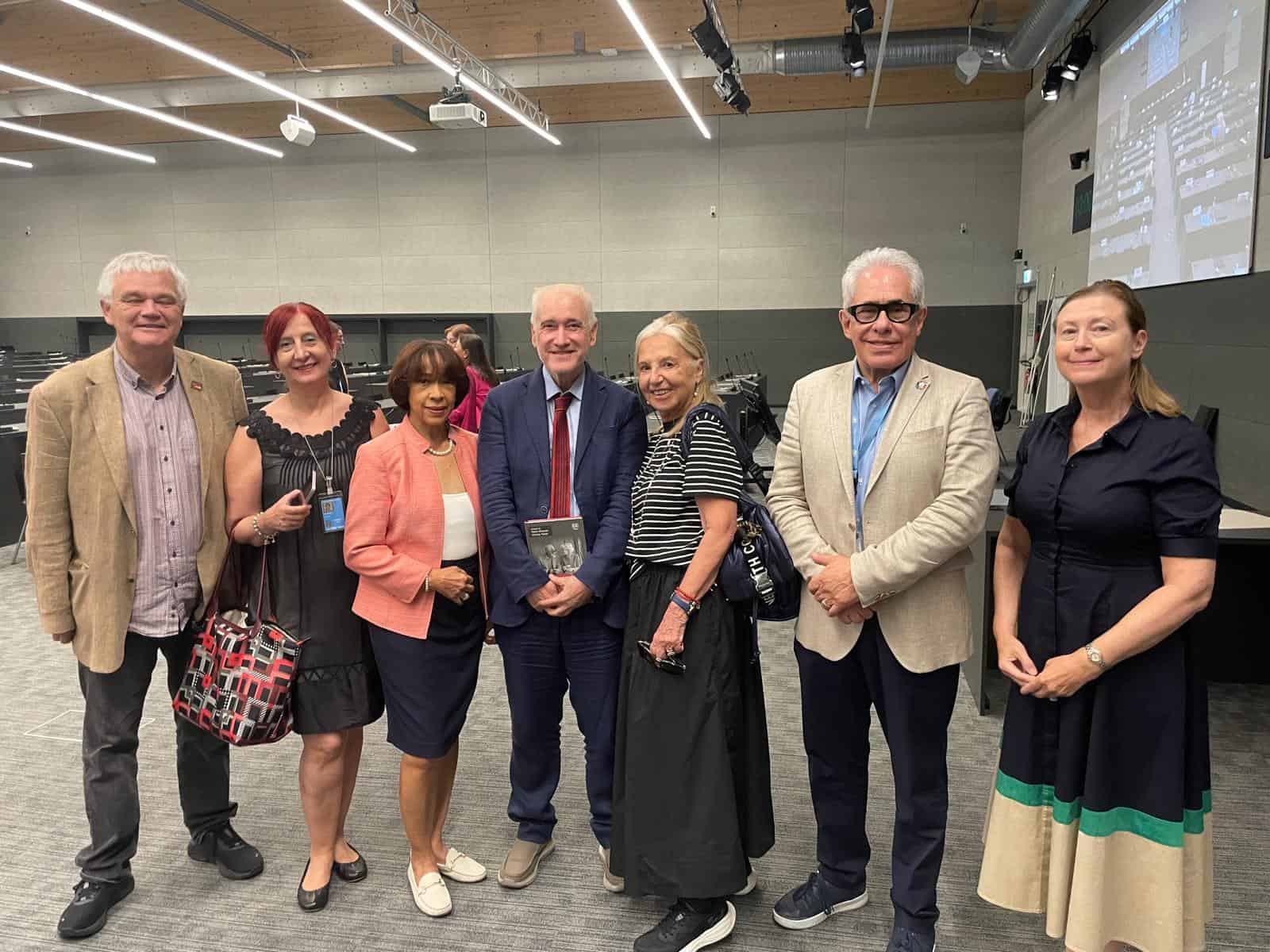
Mr. Alejandro Bonilla García, IFA Main Representative to the United Nations in Geneva (second from right), with the independent experts on the rights of older persons. Geneva, July 2026.
Historic Milestone
From 13 to 17 July 2026, the international community reached a historic first step in the advancement of the human rights of older persons. Meeting at the Palais des Nations in Geneva, the Open-ended Intergovernmental Working Group (IGWG), established by the United Nations Human Rights Council, held its first substantive session to begin drafting a United Nations Convention on the Rights of Older Persons.
This marked a decisive transition from decades of advocacy and consensus-building to the collective drafting of a new international human rights instrument. For the first time, Member States engaged in substantive discussions on the future Convention's guiding principles, scope, institutional framework and implementation, opening a new chapter in the international recognition and protection of the rights of older persons.
The International Federation on Ageing (IFA) participated throughout the session, contributing its global expertise and long-standing experience in ageing, human rights, health and social protection. Representing organizations in nearly 80 countries that collectively reach approximately 80 million older persons worldwide, IFA brought the perspectives of its diverse membership to the negotiations, supporting the development of a Convention that is ambitious, practical and firmly grounded in international human rights law.
IFA's Contribution
Throughout the session, IFA worked closely with Member States, United Nations entities, independent experts, national human rights institutions and fellow civil society organizations, contributing to both the formal negotiations and the broader dialogue surrounding the future Convention.
Representing IFA in Geneva were:
- Sue Hendy, Member of the IFA Board of Directors; Co-Chair, Human Rights as We Age Network; Director, Doutta Galla Aged Services; Vice-President, TriActive Life.
- Alejandro Bonilla García, IFA Main Representative to the United Nations in Geneva; Chair of the NGO Committee on Ageing (Geneva); International Gender Champion; Co-Chair of the CoNGO Advisory Circle of Friends.
- Xenia Scheil-Adlung, IFA Representative to the United Nations in Geneva; Vice President, Health Law Institute.
- Helen Meenan, IFA Member; Kingston University (United Kingdom); Member of the Steering Committee of the Ageism Special Interest Group of the British Society of Gerontology.
Together, the delegation brought expertise spanning human rights, international law, social protection, ageism, healthy ageing, research and multilateral diplomacy, reflecting IFA's multidisciplinary approach to advancing the rights and well-being of older persons.
As a founding member of the Global Alliance for the Rights of Older People (GAROP), IFA worked closely with GAROP throughout the preparatory process and during the session itself. GAROP played a central role in coordinating the participation of nearly 100 civil society organizations, helping to ensure that civil society contributed to the negotiations in a coordinated, constructive and effective manner.
IFA also collaborated closely with the NGO Committee on Ageing (Geneva), whose longstanding engagement within the United Nations system and active participation throughout the week further enriched the dialogue and strengthened civil society's contribution to the process.
IFA is proud to have worked alongside GAROP, the NGO Committee on Ageing (Geneva), governments, United Nations partners and many longstanding civil society organizations in this collective effort to advance the rights of older persons.
IFA also acknowledges the leadership of Ambassador Federico Villegas Foradori of Argentina, Chair of the Working Group, whose inclusive stewardship helped establish a collaborative and constructive atmosphere for this important first stage of the negotiations.
The July session marks the beginning—not the conclusion—of the drafting process. Negotiations will resume in Geneva from 26 to 30 October 2026, and IFA looks forward to continuing its active engagement throughout the development of the future Convention.
Supporting the Negotiations
Throughout the session, IFA submitted and delivered a series of formal statements addressing key elements of the future Convention. Drawing upon decades of international experience in ageing, human rights, health and social protection, together with the perspectives of its global membership, IFA sought to support Member States through practical, evidence-informed recommendations.
IFA consistently emphasized that the future Convention should be firmly grounded in the universal principles of human rights while responding to the realities and opportunities of population ageing. Its interventions highlighted the importance of adopting a life-course approach, ensuring the meaningful participation of older persons and their representative organizations, strengthening the availability and use of age-disaggregated data, and recognising older persons not only as rights holders but also as active contributors to families, communities and societies.
A central theme of IFA's contribution was that the Convention should reinforce—not duplicate—the existing international human rights architecture. IFA underscored the importance of complementarity with the work of the Human Rights Council, existing treaty bodies, the Universal Periodic Review, Special Procedures, the Office of the High Commissioner for Human Rights, National Human Rights Institutions and relevant United Nations agencies.
IFA also highlighted the valuable contribution of existing international labour and social protection standards, demonstrating how they can support the implementation of the future Convention while, in turn, benefiting from the greater visibility and coherence that a dedicated human rights instrument would bring.
Finally, IFA stressed the importance of effective implementation and accountability. The future Convention should be supported by robust monitoring arrangements capable of promoting dialogue with States Parties, encouraging continuous learning and strengthening the progressive realization of the human rights of older persons.
Throughout the week, IFA welcomed the constructive and forward-looking spirit that characterised the discussions and the shared determination of Member States and stakeholders to work collaboratively towards a Convention capable of making a meaningful difference in the lives of older persons worldwide.
Looking Ahead
The July session marked the beginning of a process that will continue over the coming months as Member States negotiate the text of a future Convention on the Rights of Older Persons. The second substantive session of the Working Group will take place in Geneva from 26 to 30 October 2026, when negotiations will continue on the substantive provisions of the Convention.
IFA will remain actively engaged throughout the process, working alongside governments, United Nations partners, GAROP, the NGO Committee on Ageing (Geneva), national human rights institutions and civil society organizations to support the development of a Convention that is ambitious, practical and capable of improving the lives of older persons worldwide.
Reflecting on the significance of the week's discussions, Gregor Sneddon, Secretary General of the IFA, said:
"This first drafting session represents the beginning of an important new chapter for the rights of older persons. IFA is honoured to contribute the experience of its global membership and to work alongside governments, GAROP and our many partners in support of a Convention that strengthens the dignity, equality and inclusion of older persons everywhere. We look forward to continuing this important work in October and beyond."
From Geneva, Alejandro Bonilla García, IFA Main Representative to the United Nations in Geneva, added:
"There was a strong sense throughout the week that we had entered a new phase. The question is no longer whether there should be a Convention on the Rights of Older Persons; the international community has begun the collective task of drafting one. It was inspiring to witness governments, United Nations partners and civil society working together with such commitment and purpose. IFA is proud to contribute to this process on behalf of its members in nearly 80 countries and the approximately 80 million older persons they represent."
As the drafting process moves forward, IFA reaffirms its commitment to working collaboratively with all stakeholders to help shape a Convention that promotes the dignity, autonomy, equality and full enjoyment of human rights by older persons everywhere.
Learn more on the 1st session of the Intergovernmental Working Group on the human rights of Older Persons here.