Pain Management
Improving access to safe, appropriate pain management across the life course.
What Does Pain Management Mean?
As people live longer, a growing proportion of later life is spent managing chronic health conditions, including pain, which disproportionately affects older adults. Pain is often persistent and under-addressed, with significant implications for functional ability, independence, and quality of life. Pain also sits at the intersection of health, ageing, workforce participation, and social support. Inadequate pain management can restrict economic participation through increased absenteeism, early retirement, and job loss, while placing emotional, physical, and financial strain on families and caregivers. Together, these impacts contribute to broader pressures on health, social care, and community systems, underscoring the importance of pain management as a core component of healthy ageing.
How Does the IFA Advance Pain Management?
Through knowledge generation, policy analysis, and stakeholder convening, IFA advances dialogue on improving access to safe, appropriate, and timely pain management for older adults. This includes strengthening awareness of pain as a public health and equity issue, supporting rights-based approaches to care, and amplifying the lived experiences of older people to inform policy, practice, and system-level responses.
Resource Spotlight
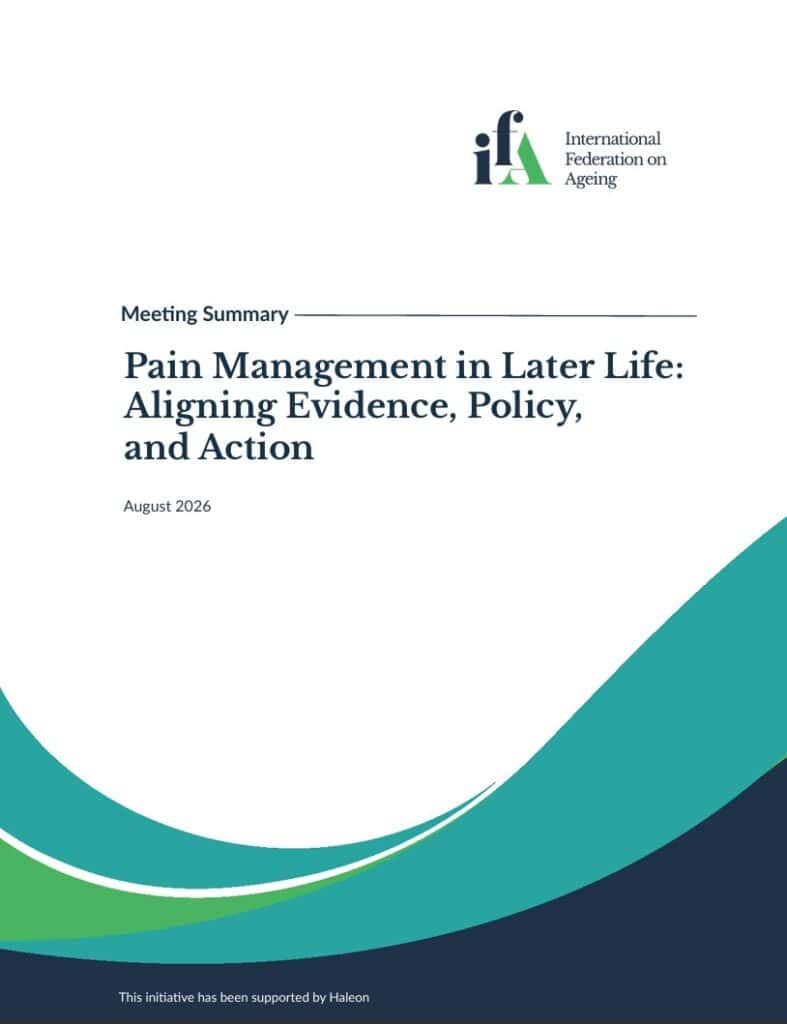
Pain Management in Later Life: Aligning Evidence, Policy, and Action
In June 2026, the International Federation on Ageing (IFA) convened the expert meeting, Pain Management in Later Life: Aligning Evidence, Policy, and Action, bringing together experts from health, care, policy, academia, civil society, and related sectors to examine the implications of pain management in the context of population ageing.
Read MoreExplore IFA Resources
Explore all IFA publications, tools, and learning resources.