Noncommunicable Diseases
Addressing noncommunicable diseases to protect health, independence, and longevity.
What Does Noncommunicable Diseases Mean?
Noncommunicable diseases (NCDs), including cardiovascular diseases, cancers, chronic respiratory conditions, obesity, and diabetes, are leading cause of death and disability worldwide. While NCDs affect people across all ages, prevalence increases with age, making them major drivers of mortality, hospitalization, frailty, and strain on health systems. Multimorbidity, the coexistence of two or more chronic health conditions, also rises with age, further compromising functional ability, quality of life, independence, and longevity.
How Does the IFA Advance Noncommunicable Diseases?
IFA advocates for integrated, person-centred approaches that prioritize prevention, early intervention, and equitable access to care across the life course, while recognizing the links between NCDs, social determinants of health, and supportive environments. IFA also promotes stronger health and social systems that are better equipped to manage chronic and complex conditions, close gaps in prevention and early detection, and shift the focus from extending life span alone to improving health span, ensuring people can age with health, independence, and dignity.
IFA works with partners across disease areas to support the implementation of high-level policy, such as at the UN and WHO levels, while also ensuring that disease-based agendas align with the imperative to build systems which prioritize healthy ageing.
Resource Spotlight
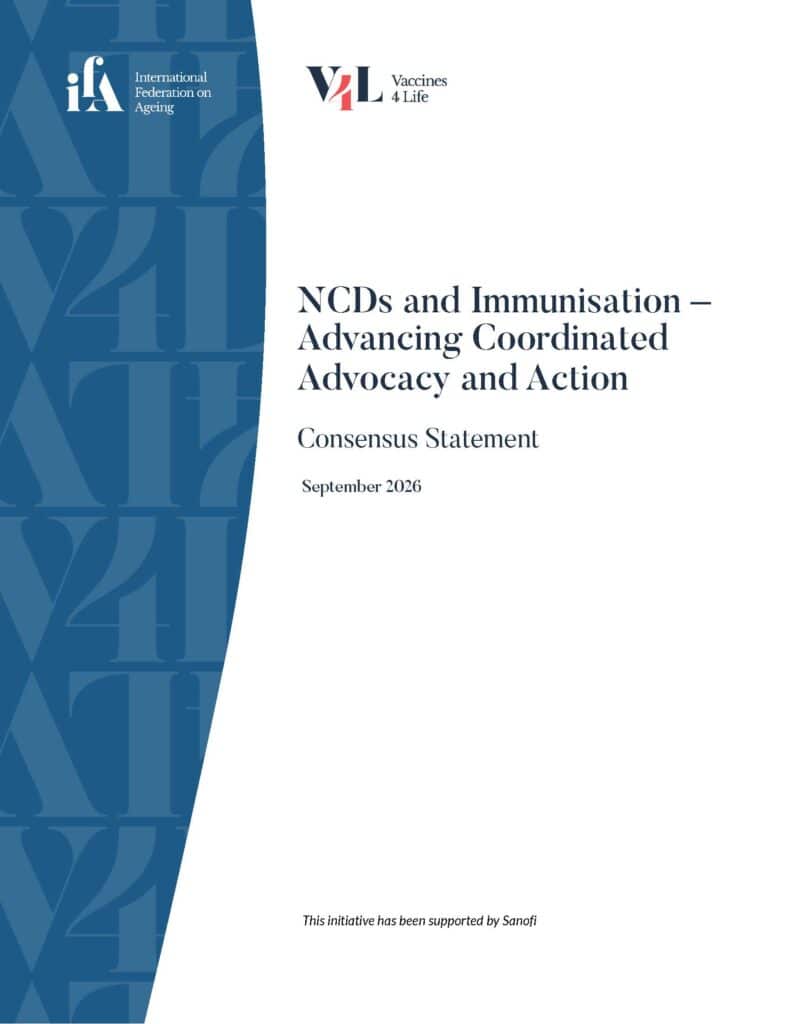
NCDs and Immunisation – Advancing Coordinated Advocacy and Action
This new Consensus Statement highlights the importance of integrating adult respiratory immunisation into NCD prevention and care. It outlines four priority areas for coordinated advocacy and action to strengthen prevention, support healthy ageing, and build more resilient health systems.
Read MoreExplore IFA Resources
Explore all IFA publications, tools, and learning resources.